Living with a cat water fountain
The part after the unboxing: tank sizes for one cat or four, steel against plastic, taking the pump apart, what a carbon filter can and cannot do, and the noise that means the water is low.
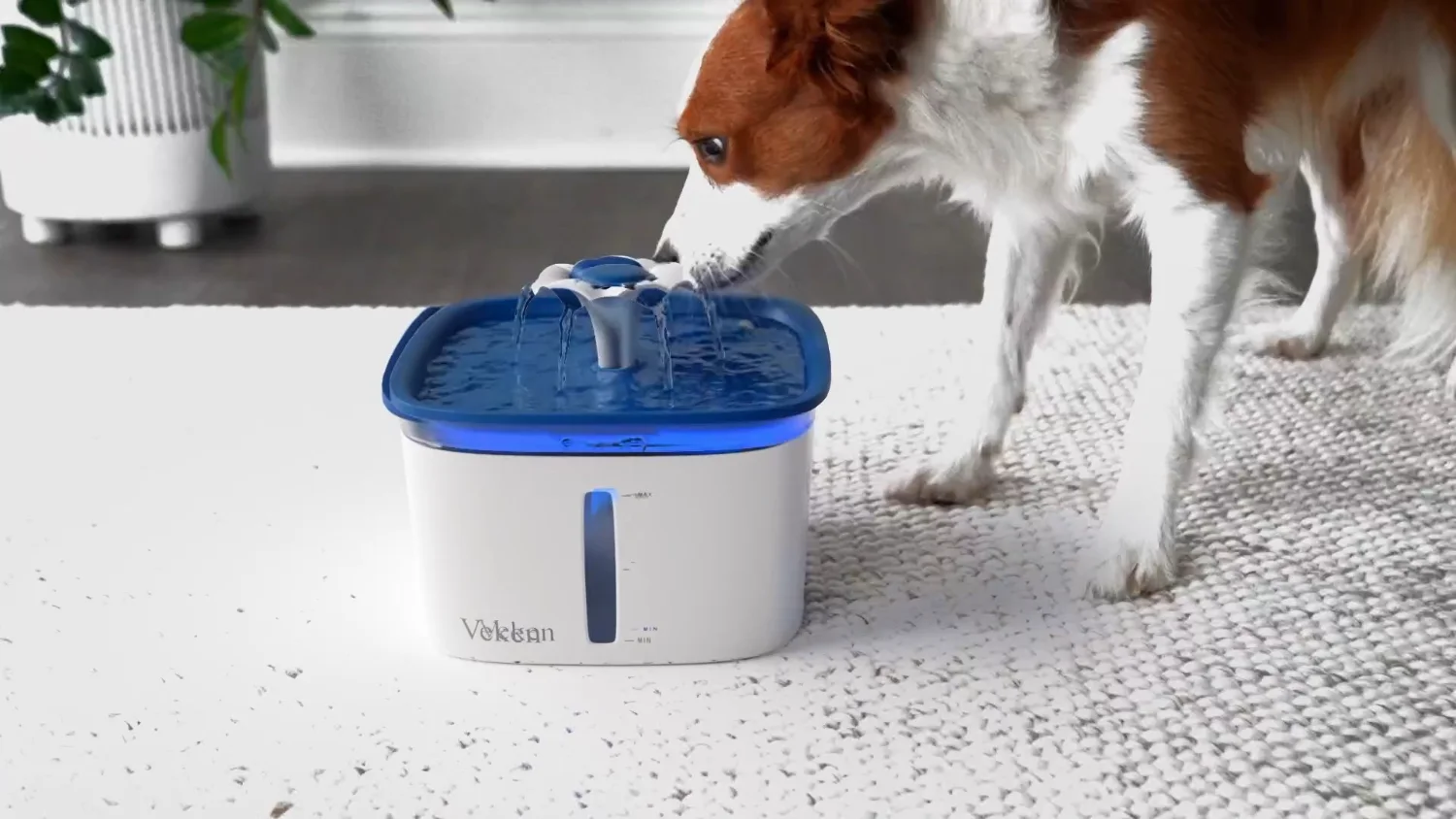
Living with a cat water fountain: the part after the unboxing
The first afternoon with a new pet fountain is usually quiet. You unpack the box, rinse the plastic or steel parts, submerge the little pump, slide the filter into its slot, fill the reservoir, and plug it in. The water bubbles up over the spout or cascades down a small tier. The cat approaches, cautious at first, sniffing the rim or patting the stream with one paw. Within a few hours, the novelty settles into a household routine.
The real test of a fountain begins six or eight weeks later. That is when the initial curiosity has passed, the filter needs its third change, and the household has to decide whether the maintenance fits into normal life. A water fountain is not a set-and-forget appliance. It is a small, recirculating plumbing system that sits on the floor in a room where hair, dust, and kibble crumbs float through the air.
Understanding how a fountain behaves over months of continuous use makes the difference between a tool that serves your home well and a neglected basin tucked away in a corner. This guide covers what happens after the unboxing: the cleaning requirements, the mechanical quirks, the filter costs, and the practical choices between materials and sizes.
Why cats watch running water
Domestic cats have an awkward relationship with standing water. Anyone who has watched a cat drink from a standard ceramic bowl has seen the hesitation. They often approach the bowl, lower their head, stop an inch above the surface, and tap the rim with a paw. Some cats will scrape the floor around the bowl before drinking. Others dip a paw into the liquid and lick the water off their fur rather than putting their mouth directly into the dish.
These habits come from feline sensory mechanics. A cat has sharp distance vision and keen motion detection, but its near vision within ten or twelve inches is soft and imprecise. There is a blind spot directly under the chin. A clear, still puddle of water in a plain white or stainless bowl provides almost no visual cues. The cat cannot tell exactly where the surface begins without touching it, causing them to dip their nose too deep, sniff water into their nostrils, or bump their sensitive whiskers against the rim of a narrow dish.
A moving water stream solves that perceptual problem. Ripples catch the light, creating contrast and motion that a cat can track easily. The gentle sound of trickling water also provides an acoustic marker. The cat hears where the water is before leaning down.
There is an instinctive layer to this as well. In nature, still water is more likely to harbor debris, silt, and bacterial overgrowth than a moving creek. While indoor cats do not reason out the bacterial load of their kitchen bowl, their behavioral preference for moving water remains active. Many will ignore a full bowl in the kitchen only to run to a bathroom sink the moment a faucet drips. A fountain reproduces that moving surface continuously, without requiring someone to turn a brass tap on and off throughout the day.
Sizing a fountain: one cat, multiple cats, and tank capacity
Pet water fountains typically range in size from compact reservoirs holding around 60 to 84 ounces up to larger capacities of 100 to 108 ounces or more. Choosing the right capacity depends on the number of animals in the home, but tank capacity is often misunderstood.
How long a tank lasts depends on the cat rather than the tank: body weight, the season, and whether the diet is wet food or dry kibble all move the number, and a wet-food cat drinks noticeably less from the bowl. In practice a single-cat home refills an 84 oz fountain on the scale of a week, and a three-cat home does it several times as often. Your own refill rhythm will settle within the first fortnight.
A larger tank does not mean you can ignore the fountain for two weeks. Water loses freshness as it circulates through open room air, catching floating dust, dander, and shed fur. More importantly, evaporation lowers the water level faster than you might expect, especially during winter months when central heating dries the indoor air.
What a larger capacity really buys is a buffer for safety and pump preservation. Small pumps rely on the surrounding water for cooling and lubrication. If an 84 oz tank drops by half its volume, the pump remains safely submerged, but the water begins to circulate faster over the same debris. A 108 oz reservoir gives a multi-cat household enough margin that the pump will not run dry if you leave home for a long weekend.
For a single cat, an 84 oz model provides a manageable footprint and uses less water during complete drain-and-refill cycles. For two or more cats, or a home with a cat and a small dog sharing the water source, moving up to 95 or 108 ounces prevents the reservoir from needing top-offs every twenty-four hours. In every case, remember the golden rule of fountain capacity: a larger tank reduces the frequency of refills, but it never reduces the frequency of required cleanings.
Stainless steel and plastic: the daily differences
Most pet fountains on the market are built from either BPA-free plastic or food-grade stainless steel. Both materials function well when new, but they age differently under continuous use.
Plastic fountains are light, inexpensive, and easy to mold into quiet flow shapes with built-in ledges, ramps, and hidden cord channels. A complete plastic unit can be found between $12.99 and $25.00, making it an accessible starting point. High-grade plastic handles room temperature water without issues and can tolerate top-rack dishwasher cycles if the temperature remains moderate.
Plastic has one fundamental physical vulnerability: softness. Over months of cleaning with sponges or brush bristles, the smooth interior surfaces of a plastic reservoir develop microscopic scratches. Hairline fissures also appear around snap-fit tabs and pump brackets. These tiny grooves collect mineral scale from hard tap water and create sheltered pockets where biofilm can anchor itself. Once a plastic basin is heavily scratched, keeping it completely smooth and clean requires more frequent scrubbing. Some cats also develop feline acne, a condition characterized by small black bumps on the chin, when their skin repeatedly rubs against bacteria-harboring plastic rims.
Stainless steel fountains sit at a higher price point than plastic for the same capacity. Stainless steel provides a non-porous, smooth surface that resists scratches from normal cleaning pads and fingernails. It tolerates hot water, high-heat dishwasher cycles, and mild sanitizing solutions without degrading.
Steel units also carry more physical weight, which prevents energetic cats from sliding the basin across the kitchen floor or tipping it over when they lean their front paws on the top tray. The trade-off with stainless steel is sound transmission. Water falling directly onto a steel plate makes a brighter, more distinct tapping sound than water falling onto plastic, though well-engineered flow ramps minimize this noise. If long-term durability and dishwasher sanitation are your main priorities, stainless steel holds up better over several years of weekly scrub cycles.
The cleaning rhythm and the CDC bowl rule
The most common point of failure for cat fountains is not a broken motor or a cracked shell. It is the cleaning schedule. When a fountain is neglected, the moving water masks the fact that the internal surfaces have become coated with organic film.
To understand the baseline requirements for pet hydration gear, look to general pet hygiene standards. The CDC's page on pet food safety provides clear guidance for basic pet hardware: clean pet food and water bowls, scoops, feeding mats, and placemats frequently. The CDC also instructs pet owners to wash their hands with soap and water before and after handling pet food and supplies.
The CDC guidelines explicitly address regular dishes and bowls, not motorized pet fountains. Applying this principle to a multi-piece fountain with a reservoir, internal plumbing, and a submerged electrical pump requires carrying the rule over into a more complex setup. If a simple, flat water bowl needs frequent washing, a fountain requires that same frequency plus careful attention to its moving mechanical parts.
Biofilm is the primary issue. Within forty-eight to seventy-two hours of running fresh water, saliva from the cat's tongue combines with ambient bacteria to produce a clear, slippery layer on the walls of the basin, the underside of the top tray, and inside the pump cavity. You cannot always see biofilm, but you can feel it immediately: the surface feels slick rather than squeaky clean.
A realistic, sustainable maintenance schedule looks like this:
Every two to three days: Give the fountain a quick inspection. Check the water level through the window or by lifting the lid. If the level is low, top it off with fresh tap or filtered water. Check the top tray for trapped hair or bits of food and rinse them away under the faucet.
Every seven days: Perform a full teardown and wash. Unplug the fountain, carry the entire unit to the sink, and dump the remaining water. Remove the filter and set it aside (do not wash filters with soap). Disassemble the housing, tray, and pump brackets.
Wash every non-electrical housing part in warm, soapy water using a soft dishcloth or non-scratch sponge. If the unit is dishwasher-safe and made of stainless steel, run it through the normal cycle. Wash the pump body and its cord exterior by hand.
Rinse every component thoroughly with clean running water until there is zero soap scent or residue left behind. Soap residue tastes bitter to cats and can cause stomach upset if ingested.
Once a month: Perform a deep descale. If you live in an area with hard municipal water or well water, white calcium deposits will build up on the pump impeller and in the corners of the reservoir. Soak the plastic or steel housing parts in a solution of equal parts white distilled vinegar and warm water for twenty minutes. The mild acid dissolves mineral crust without damaging the materials. Rinse with copious amounts of fresh water before reassembling.
Always follow the basic hygiene rule emphasized by the CDC: wash your hands with warm water and soap after cleaning the fountain parts and before refilling the tank.
Disassembling the pump
Many people clean the plastic basin every week but never open the pump itself. After two or three months, the fountain suddenly stops pumping, or the flow slows to a trickle. The owner assumes the motor has burned out, but in nine out of ten cases, the pump is simply choked with debris.
Submersible fountain pumps are simple low-voltage devices. They do not use gears or sealed drive shafts. Instead, they use a tiny magnetic propeller called an impeller, suspended inside a wet cylindrical well. Water flows directly through this chamber to keep the magnet cool.
Over weeks of continuous operation, fine cat hairs and microscopic fibers bypass the foam pre-filter, wind themselves around the impeller shaft, and create friction. Slime coats the magnet, slowing its rotation until the motor hums without pushing water.
Opening a small pump takes less than two minutes once you know the steps:
First, pull the pump out of the basin and detach any suction cups holding it to the bottom.
Second, remove the front faceplate. On most small pumps, this is a snap-on plastic cover with an intake grate or a sliding flow control slider. Pry it off gently with your thumb or a butter knife.
Third, remove the teardrop-shaped intake plate or stator hidden behind the faceplate. This reveals the cylindrical well.
Fourth, pull out the impeller. The impeller is a small plastic fan attached to a cylindrical magnet. It is held in place entirely by magnetic attraction. Grip the blades gently with your fingertips or a pair of blunt tweezers and pull straight out.
Fifth, clean the cavity. Use a small pipe cleaner, a straw brush, or a dedicated pump brush to scrub the inside of the metal well. Clean the magnetic cylinder and the tiny fan blades. Rinse away all hair and black slime under running water.
Sixth, drop the impeller back into its well. The magnet will snap it firmly into place. Snap the stator and faceplate back onto the front of the pump housing.
Doing this quick tear-down once every two weeks keeps the motor running silently and extends the lifespan of the pump for years.
How filters work, and what they cannot do
Replacement filters are an ongoing part of fountain ownership. Understanding what these cartridges actually do helps set realistic expectations for water cleanliness.
A standard cat fountain filter cartridge combines two or three distinct stages of filtration:
The outer layer is usually a non-woven polyester mesh or cotton pad. This acts as a physical barrier. It catches cat hair, large dust particles, flying insects, and dry food crumbs before they can enter the lower reservoir or get sucked into the pump intake.
Inside the cartridge sits granular activated carbon, often derived from coconut shells. Activated carbon performs chemical adsorption. It removes chlorine tastes, odors, and common organic compounds from municipal tap water, making the water smell and taste clean to a cat's sensitive nose.
Many cartridges also include ion-exchange resin beads. These tiny golden beads attract heavy metal ions and exchange calcium and magnesium ions for sodium or hydrogen, softening the water slightly and slowing the rate of mineral scale formation on the pump components.
Filters perform useful mechanical and chemical work, but they do not sterilize the water. A carbon filter does not kill bacteria, remove viral pathogens, or prevent biofilm from growing on the tank walls. It cannot clean stagnant slime out of the pump well.
Relying on a filter to keep the fountain clean without weekly hand washing leads to dirty water. The filter treats the water that passes through its core, but organic matter trapped against the filter mesh remains in contact with the circulating water until the cartridge is discarded.
Filter replacement timing depends on the number of pets using the fountain. In a single-cat home, replace the composite filter every two to four weeks. In a home with three or four cats, replace it every two weeks.
Rinse every new filter under cold running water for thirty to sixty seconds before placing it into the tray. This flushes away loose, harmless black carbon dust generated during shipping so it does not settle at the bottom of your clean reservoir.
Keeping a modest supply of replacements on hand avoids the temptation to run an old, saturated cartridge for months. Fountain care supplies typically come in filter packs of 4, 8, and 16, allowing households to match their supply to their cleaning schedule.
Pump noise, vibration, and low water levels
Under normal conditions, a well-designed fountain runs with a quiet, soothing whisper. You should hear the soft motion of water, not the grinding rattle of machinery. When a fountain gets noisy, the machine is telling you that something in its physical setup needs adjustment.
The most frequent cause of fountain noise is low water volume. Submersible pumps need water above their intake grates to operate correctly. When the water level drops below the top of the pump housing, the impeller draws in air bubbles along with the liquid. This process, called cavitation, causes a distinctive, throaty gurgle followed by a sharp rattling sound as the impeller spins unevenly against air pockets.
Running a pump dry creates friction heat that can permanently warp the plastic impeller blades or melt the internal resin seal, ruining the motor. Get into the habit of checking the water level every time you brew morning coffee or feed your pets. A simple visual check takes two seconds and prevents dry-run damage.
If the tank is completely full but the fountain still buzzes loudly, the cause is usually mechanical vibration. The pump motor vibrates at a continuous low frequency. If the pump's rubber suction cups have slipped and the hard plastic motor body is pressed directly against the bottom or side of a plastic or metal tank, the entire basin acts as a sounding board, amplifying the hum throughout the room.
To fix vibration noise: Unplug the unit, reach inside, and verify that the pump sits flat on its rubber feet without touching the vertical basin walls. Make sure the internal silicone discharge tube connecting the pump to the top spout is aligned straight and not kinked or jammed against the lid. Check the floor surface beneath the fountain. A fountain sitting directly on hardwood, ceramic tile, or thin laminate will transfer motor hum straight into the floorboards. Placing a silicone feeding mat or a thin non-slip rubber pad under the entire unit dampens vibration instantly and catches any stray splashes your cat creates while drinking.
A fountain that has started to rattle is usually a fountain that is thirsty.
Room placement and household traffic
Where you put a fountain in your home influences whether your cat will actually use it. Humans tend to choose locations based on electrical outlet convenience and out-of-the-way floor space. Cats evaluate locations based on their territorial instincts and sensory sensitivities.
There are three common placement mistakes to avoid:
Do not place the fountain directly next to the litter box. Cats have an instinctive aversion to drinking water near elimination sites, a behavior that protects them from contamination in the wild. Placing a fresh water source within three or four feet of a litter tray often results in the cat refusing to touch the fountain entirely. Furthermore, fine clay dust kicked up during litter box digging floats across the floor and settles directly into the open fountain pool, clogging the filter prematurely.
Do not place the water fountain directly beside the food bowl. In natural environments, wild felines do not drink immediately beside their fresh kills to avoid water fouled by carcasses. Many domestic cats drink significantly more water if their hydration station sits five, ten, or fifteen feet away from their dry kibble dish. Separating food and water also keeps scattered food bits from bouncing off the floor and splashing into the clean water tray.
Avoid high-traffic pinch points and noisy household appliances. A fountain placed directly beside a booming refrigerator compressor, a clattering dishwasher, or a heavy hallway door makes timid cats nervous. A cat drinking from a low basin is in a physically vulnerable posture with its head down. Place the fountain in a quiet, open corner where the cat can stand with its back to a wall and maintain a clear line of sight across the room while drinking.
Electrical logistics matter as well. Make sure the fountain cord runs along baseboards rather than stretching across open walking paths where people might trip or pets might chew. Always leave a small "drip loop" in the power cord: let the wire hang down below the level of the wall outlet before rising up to plug in. If water splashes out of the basin and runs down the cord, the loop ensures droplets fall harmlessly onto the floor rather than traveling directly into the electrical socket.
Power outages, travel, and backup plans
Because fountains rely on electricity to move water, power interruptions change how the device functions. Planning for outages and travel keeps your pets safe when you are away from the house.
Different fountain designs handle power loss in different ways. Some models feature a deep, open drinking bowl on top that retains several ounces of standing water even when the pump stops turning. Other designs use a shallow runoff ramp or a flat tray that drains almost all water back into a sealed lower reservoir the moment the motor shuts off.
If power fails while you are at work and your fountain uses a sealed reservoir with a flat, draining top tray, your cat may have no way to reach the water stored inside the lower tank. When selecting a fountain, look for models that leave a modest open pool of water accessible on top during an outage.
If you are planning to travel for more than twenty-four hours, never rely on a single electric fountain as the sole source of water in your home. Motorized devices can stall if a stray hair binds the impeller, a breaker can trip during a summer thunderstorm, or an energetic pet can knock the power brick loose from a wall socket.
When leaving pets under the care of a visiting pet sitter, leave at least one heavy, wide-based ceramic or stainless steel bowl full of still water in another room as a fail-safe backup. Show your pet sitter how to top off the fountain reservoir, where replacement filters are kept, and how to unplug the pump if it begins to gurgle from low water.
The trade-off
A water fountain can significantly improve daily hydration for indoor cats. The moving stream catches their eye, draws them away from bathroom faucets, and provides clean, aerated water that tastes fresh throughout the day. For multi-pet households, the extra capacity reduces the constant chore of filling small bowls morning and night.
However, a fountain is an appliance that demands consistent human labor. It has nooks, impellers, silicone grommets, power cords, and filter housings that collect slime, hair, and hard water minerals. It cannot be refreshed by merely tipping it into the sink and running five seconds of tap water over the top. It must be taken apart, scrubbed with soap, descaled with vinegar, and cleared of hair every week.
A neglected fountain filled with stale water, slimy walls, and a choked pump is far worse for your cat's health and comfort than a simple ceramic bowl washed daily with the dinner dishes.
If your weekly household routine has room for ten minutes of quiet maintenance at the kitchen sink, a fountain is one of the most rewarding additions you can make to your pet's domestic space. If those ten minutes will consistently feel like a burden, stick with a heavy stainless steel or ceramic dish, wash it every single morning, and keep your routine simple. The best water source for any cat is always the one that the household actually keeps clean.
This is a cleaning and equipment guide, not veterinary advice. A cat that suddenly drinks much more or much less than usual should be seen by a veterinarian rather than given a new bowl.
The rest of the Veken range is on the front page, and the figures behind it are in how we update.